
Conservation of Olive Ridley Turtles
- 31 Mar 2026
In News:
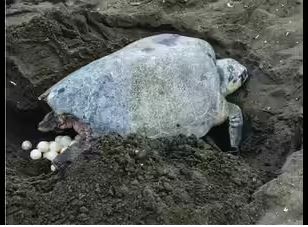
The Wildlife Management Authority, in collaboration with the Coringa Wildlife Sanctuary, has successfully conserved nearly 20,000 Olive Ridley turtle eggs on Hope Island in Kakinada Bay, Andhra Pradesh. This highlights the growing importance of the East Coast, beyond Odisha, as a critical habitat for marine conservation.
Hope Island: A Sanctuary in Kakinada Bay
Hope Island serves as a vital nesting ground in Andhra Pradesh. Conservationists utilize the in-situ conservation method, where eggs are protected in their natural nesting environment to ensure higher hatching success and maintain the ecological balance of the bay.
Species Profile: Olive Ridley Turtles (Lepidochelys olivacea)
- Physical Characteristics: They are the world’s smallest and most abundant sea turtles. They are recognized by their unique heart-shaped, olive or grayish-green carapace.
- Habitat: Primarily found in the tropical waters of the Pacific, Indian, and Atlantic Oceans, inhabiting both the open sea and coastal regions.
- Diet: Being omnivorous, they feed on a variety of marine life including jellyfish, snails, crabs, and shrimp/algae.
- Behavioral Phenomemon (Arribada): They are famous for "Arribada"—a Spanish term for "arrival"—which refers to the synchronized mass nesting where thousands of females come ashore simultaneously to lay eggs (approx. 100–140 eggs per female).
Distribution and Key Indian Nesting Sites
The turtles undertake massive migrations from the Pacific toward the Indian coast, typically arriving between November and December and staying until April–May.
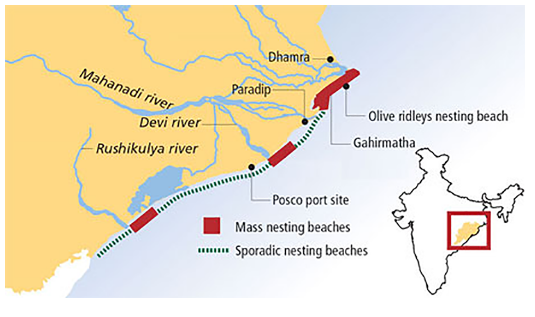
- Odisha: Home to the world's largest nesting sites, including Gahirmatha Marine Sanctuary, Rushikulya, and the Devi River mouth.
- Andhra Pradesh: Increasingly significant sites in Kakinada (Hope Island) and Visakhapatnam.
- Others: Andaman and Nicobar Islands and parts of the Tamil Nadu coast.
Conservation Status and Legal Framework
To mitigate the decline in population, Olive Ridleys are afforded the highest level of protection:
- IUCN Red List: Vulnerable.
- Wildlife Protection Act (WPA), 1972: Schedule I (highest protection in India).
- CITES: Appendix I (prohibits international trade).
- CMS (Convention on Migratory Species): Protected under this global intergovernmental treaty.
Threats and Protection Measures
Despite legal safeguards, the species faces multifaceted challenges:
- Major Threats:
- Bycatch: Accidental entanglement in trawl and gill nets is the leading cause of mortality.
- Poaching: Illegal trade of eggs and meat.
- Habitat Loss: Coastal erosion and light pollution (which disorients hatchlings).
- Key Conservation Initiatives:
- Operation Olivia: An annual mission by the Indian Coast Guard to enforce seasonal fishing bans and protect nesting sites.
- Turtle Excluder Devices (TEDs): Mandated for use in trawl nets to allow turtles to escape while retaining the fish catch.
- Tagging Programs: Using metal tags to track migration patterns and nesting frequency.
Olive Ridley Turtles
- 30 Jan 2025
In News:
The Rushikulya river mouth in Odisha is witnessing the anticipated mass nesting of Olive Ridley turtles — a critical event for the survival of this vulnerable marine species. This phenomenon, known as arribada, highlights the ecological significance of India’s coastal biodiversity and the urgent need for marine conservation.
About Olive Ridley Turtles (Lepidochelys olivacea)
- Taxonomy:
- Scientific Name: Lepidochelys olivacea
- Class: Reptilia
- Family: Cheloniidae
- Physical Features: These turtles are the smallest and most abundant of all sea turtle species. They are recognized by their olive or grayish-green heart-shaped carapace. Males and females are similar in size, though females have slightly rounder shells.
- Habitat and Distribution: Olive Ridleys are found in warm, tropical waters of the Pacific, Atlantic, and Indian Oceans, inhabiting both open ocean (pelagic) and coastal waters.
Mass Nesting: The Arribada Phenomenon
- Arribada (Spanish for "arrival") refers to the synchronized mass nesting behavior where thousands of females gather on a single beach to lay eggs.
- Nesting occurs annually between December and March, after long migrations of up to 9,000 km. Each female may lay 90–120 eggs, 1 to 3 times per season.
- Temperature-dependent sex determination influences hatchling sex ratios.
- After nesting, females return to the sea, leaving eggs buried in sand.
Major Nesting Sites in India
- Odisha Coast is the most significant nesting ground in India and globally:
- Gahirmatha Marine Sanctuary: World’s largest mass nesting site.
- Rushikulya River Mouth: Second-largest nesting beach in India.
- Devi River Mouth: Another key nesting site in Odisha.
- Andaman and Nicobar Islands have recently emerged as a new mass nesting area, with over 5,000 nests reported in one season.
Ecological Role and Behavior
- Diet: Omnivorous — they feed on jellyfish, crabs, snails, prawns, molluscs, algae, and small fish.
- Behavior: These turtles undertake long migrations annually between feeding and breeding grounds, spending most of their lives at sea.
Protection Status
- IUCN Red List: Vulnerable
- CITES: Appendix I
- Wildlife (Protection) Act, 1972 (India): Schedule I (highest protection)
Threats to Survival
- Bycatch in Fishing Gear: Accidental entanglement in trawls, gillnets, and longlines.
- Habitat Loss: Coastal development for ports, tourism, and industry disrupts nesting beaches.
- Poaching: Turtles and their eggs are harvested for meat, shell, and leather.
- Pollution: Plastic ingestion and marine debris pose severe health risks.
- Climate Change: Rising sea levels and increased sand temperatures impact nesting and hatchling sex ratios.
Conservation Initiatives
- Operation Olivia: Initiated by the Indian Coast Guard in the 1980s to protect turtles during nesting and prevent illegal fishing.
- Turtle Excluder Devices (TEDs): Mandated by the Odisha government in trawl nets; allow turtles to escape while retaining fish catch.
- Tagging Programs: Use of non-corrosive metal tags to study migration patterns and inform conservation strategies.