
Digital Public Infrastructure for Fraud Risk Management
- 29 Jun 2025
In News:
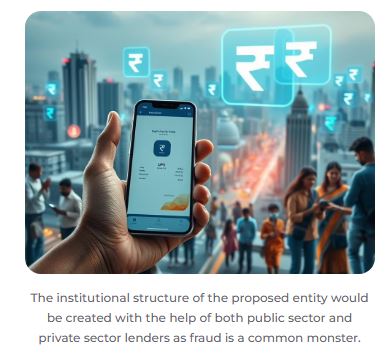
The Reserve Bank of India (RBI) is set to develop a Digital Public Infrastructure for Fraud Risk Management (DPIP) under its supervision to curb rising instances of banking frauds in India. This aligns with broader efforts to enhance security and transparency in India’s financial ecosystem.
What is Digital Public Infrastructure (DPI)?
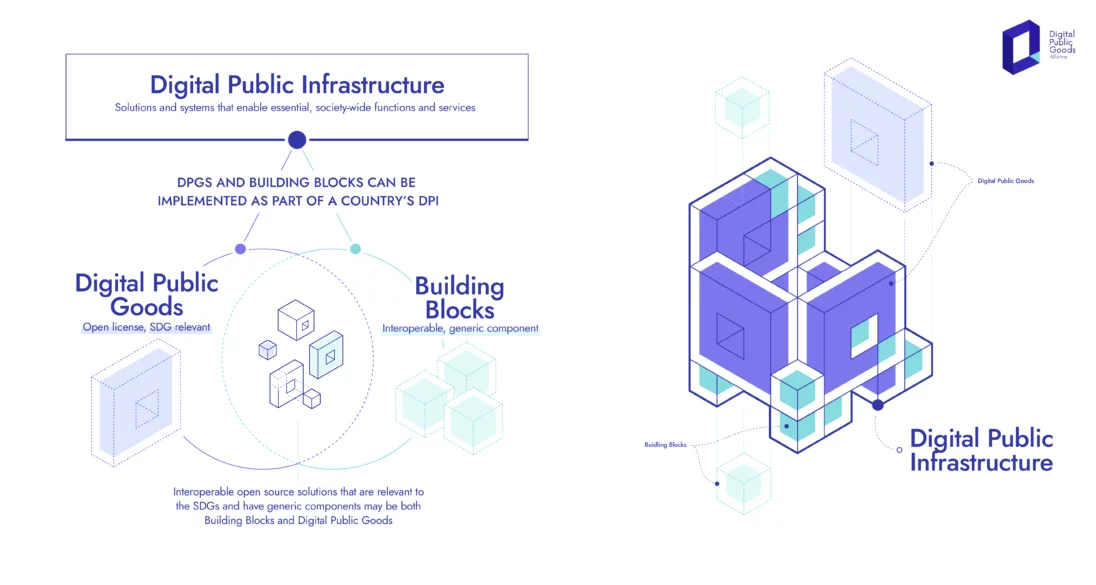
- Definition: DPI refers to foundational digital systems that are accessible, secure, interoperable, and designed to deliver essential public services.
- Examples in India:
- Aadhaar (Digital ID)
- Unified Payments Interface (UPI)
- DigiLocker, CoWIN, etc.
About DPIP
- Objective:To enhance fraud risk management through real-time intelligence sharing, data gathering, and interbank coordination using advanced technologies.
- Key Features:
- Will strengthen existing fraud detection systems in the banking ecosystem.
- Enables interoperable intelligence sharing between banks and financial institutions.
- Leverages AI/ML tools and data analytics for better predictive fraud detection.
- Institutional Mechanism:
- A committee under Shri A.P. Hota has been constituted to examine various aspects of DPIP’s implementation.
- RBI Innovation Hub (RBIH) is tasked with developing a prototype, in consultation with 5–10 public and private sector banks.
Need for DPIP
- Rise in Bank Frauds:
- As per RBI’s Annual Report:
- FY 2024: ?12,230 crore in frauds
- FY 2025: ?36,014 crore — almost 3x increase
- Increasing sophistication of cyber threats and fraud techniques necessitates robust preventive digital infrastructure.
- As per RBI’s Annual Report:
Other RBI Initiatives to Combat Bank Frauds
Initiative Description
Multi-Factor Authentication (MFA) Mandatory for all digital/electronic payments to ensure
secure transactions.
Zero Liability Framework Customers are not liable for losses arising from bank’s
negligence or third-party breaches.
bank.in and fin.in domains Reserved for verified bank websites to help customers
avoid phishing and fake sites.
Good Digital Public Infrastructure
- 08 Sep 2024
Good digital public infrastructure (DPI) integrates technology with societal needs, ensuring that it is secure, scalable, and inclusive.
India’s achievement of over 80% financial inclusion in just six years has drawn international praise, particularly as a model for the Global South. This accomplishment underscores India’s success in achieving both digital and financial inclusion for over a billion people. Consequently, the G20 summit in New Delhi in 2023 highlighted the critical role of digital public infrastructure.
In response, India’s G20 task force has released a comprehensive report outlining a global strategy for DPI development. This positions India to support other nations in achieving digital sovereignty, financial inclusion, and self-reliance.
The evolving digital landscape is marked by a variety of stakeholders—including private enterprises, government bodies, non-profits, and think tanks—each working to advance their DPI solutions. This raises two key questions: How can we identify genuine and reliable DPIs from the plethora available? And what differentiates a “good DPI” from a “bad DPI”?
Identifying effective DPI involves assessing how well technology meets societal needs while ensuring security, scalability, and inclusivity. Authenticity and adherence to core principles are essential for evaluating DPIs.
The Citizen Stack Model
Citizen Stack, built upon the proven success of India Stack, emerges as a trusted ecosystem in digital infrastructure. India Stack, a robust digital platform, has demonstrated its effectiveness and security on a vast scale, serving over a billion citizens. This strong foundation enhances Citizen Stack’s credibility and reliability. Unlike DPI manufacturers, Citizen Stack functions as a regulatory body or auditor, certifying and authenticating DPIs to ensure they meet high standards of quality and security.
Citizen Stack’s approach is comprehensive, focusing on security, scalability, and inclusivity. The DPI platforms approved by Citizen Stack are designed to meet the diverse needs of large populations while maintaining stringent security measures to protect user data and privacy. As an auditor, Citizen Stack ensures that certified DPIs are dependable, secure, and beneficial to the public.
In an era of abundant digital solutions and promises, distinguishing genuinely reliable platforms is essential. Citizen Stack offers assurance as a gold standard for DPI solutions.
Guiding Principles of a “Good DPI”
Citizen Stack has established five core principles—referred to as sutras—that define a good DPI:
- Maintain Citizen Relationships: Ensure that digital infrastructure supports a fair relationship between citizens, the market, and the state, free from undue influence.
- Protect Empowerment and Privacy: Implement consent-based data sharing systems that prioritize individual empowerment and privacy.
- Prevent Monopolistic Lock-In: Ensure interoperability to avoid citizens being restricted by monopolistic entities.
- Combine Techno-Legal Regulation: Integrate technology with legal frameworks to govern ethical tech use, ensuring innovation while safeguarding security and societal rights.
- Foster Public-Private Innovation: Encourage collaboration between public and private sectors, while avoiding corporate dominance. The focus should be on public good rather than corporate monopolies, and technology should prevent exploitation by state or corporate actors.
MeitY signs MoU with Cuba for cooperation on digital public infrastructure (ET)

- 22 Jan 2024
Why is it in the News?
India and Cuba have signed an MoU for cooperation in the field of sharing successful digital solutions implemented at the population scale for digital transformation.
India and Cuba Bilateral Relations:
- India and Cuba share a robust and longstanding diplomatic camaraderie, marked by warmth and amity.
- In a gesture of early support, India was among the first nations to acknowledge and establish relations with the new Cuban government post the revolutionary events in January 1959.
- Trade Dynamics: The bilateral trade engagement, while moderate, exhibits a diverse array of commodities.
- India exports pharmaceutical products, organic chemicals, plastic goods, medical equipment, engineering items, textiles, metal products, mineral oil products, and tools to Cuba.
- Conversely, Cuba primarily imports pharmaceuticals and tobacco products from India.
- Energy Partnership: A pivotal facet of India-Cuba relations is their collaboration in the energy sector.
- As a member country and Vice-President of the Latin America & the Caribbean region at the International Solar Alliance (ISA), Cuba plays a significant role in fostering energy cooperation between the two nations.
- Advancements in Science & Technology, Biotechnology, and Health: The bilateral relations in the domains of science, technology, and health have been fortified through ministerial-level visits from both nations.Development Collaboration: Prioritizing development assistance has been a cornerstone of their bilateral ties.
- India has extended disaster relief assistance to Cuba in the aftermath of hurricanes that have afflicted the region over the years.
- Cultural Relations: Cuban appreciation for Indian culture and civilization is evident, with figures like Mahatma Gandhi, Jawaharlal Nehru, and Rabindranath Tagore holding a special place in Cuban hearts.
- Indian Diaspora: Although the Indian community in Cuba is relatively small, it includes descendants of Indians who migrated to Cuba in the early twentieth century from Jamaica and other parts of the West Indies to contribute to sugarcane plantations.
What is Digital Public Infrastructure (DPI)?
- DPI is a digital network that enables countries to safely and efficiently deliver economic opportunities and social services to all residents.
- DPI can be compared to roads, which form a physical network that connects people and provides access to a huge range of goods and services.??
- DPI allows people to open bank accounts and receive wages faster and more easily.
- It allows governments to support citizens more quickly and efficiently, especially during emergencies.
- And it enables entrepreneurs to reach customers far and wide.??
- A strong DPI has three foundational systems—identity, payments, and data exchange—that together can make life easier in important ways.?
- When the three core systems—identity, payments, and data exchange—exist simultaneously and can talk to one another, people, businesses, and governments can reap the full benefits of DPI.
- Over time, safe and inclusive DPI creates vibrant and competitive economies.?
Global Digital Public Infrastructure Repository (Financial Express)
- 24 Nov 2023
Why is it in the News?
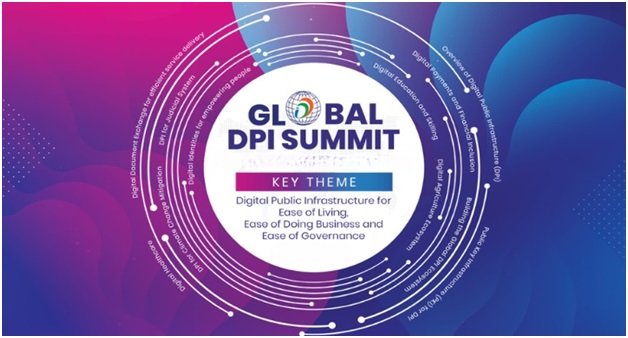
Prime Minister announced the launch of two India-led initiatives: the Global Digital Public Infrastructure Repository and a Social Impact Fund aimed at promoting the development of Social Impact Fund to advance Digital Public Infrastructure (DPI) in the Global South during the Virtual G20 Leaders’ Summit on 22nd November 2023.
About the Global Digital Public Infrastructure Repository:
- It was developed by the Ministry of Electronics and Information Technology (MeitY).
- It is an extensive resource center that combines knowledge and insights from G20 members and visiting countries.
- Its primary objective is to fill the knowledge gap in the decision-making processes and methodologies necessary for designing, constructing, deploying, and governing Digital Public Infrastructures (DPIs).
- The GDPIR presents information in a standardized format from countries and organizations that have successfully implemented DPIs on a large scale.
- This includes elements such as maturity scales, source codes (where available), and governance frameworks.
- Currently, the GDPIR showcases 54 DPIs from 16 countries.
- The DPIs from India featured in the GDPIR include
- Aadhaar, Unified Payments Interface (UPI), eSanjeevani, Ayushman Bharat Digital Mission (ABDM), DigiLocker, Umang, Co-WIN, Government e-marketplace, API Setu, Diksha, E-Hospital and Poshan Tracker etc.
What about the Social Impact Fund?
- The fund will financially support countries developing DPIs, providing “upstream technical and non-technical assistance”.
- The platform allows other governments, international organisations, and philanthropies to contribute to the fund too.
- India has pledged an initial commitment of $25 million (USD) to the fund.