
Dalma Wildlife Sanctuary
- 20 Apr 2026
In News:
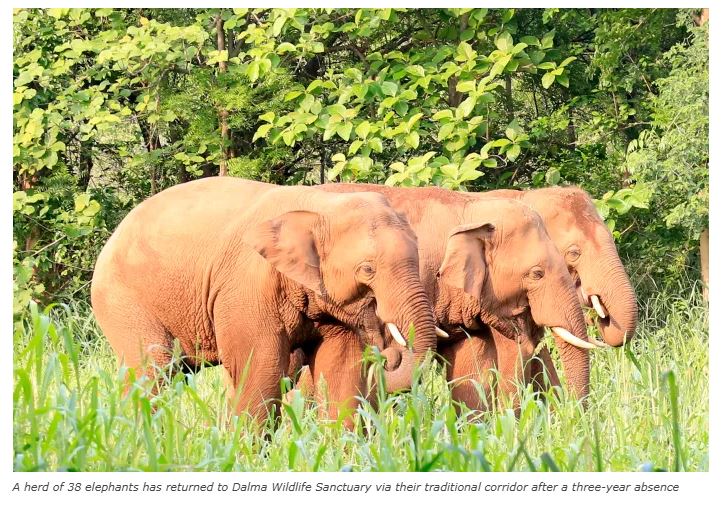
In a significant development for regional biodiversity, a herd of 38 elephants has returned to the Dalma Wildlife Sanctuary in Jharkhand after a hiatus of nearly three years. This migratory return highlights the sanctuary’s role as a critical corridor for the Asian Elephant and underscores the importance of the Chota Nagpur Plateau in India’s wildlife conservation efforts.
Geographical and Cultural Context
- The Dalma Wildlife Sanctuary is nestled within the Dalma Hills of the Chota Nagpur Plateau in Jharkhand.
- The sanctuary holds profound cultural value, deriving its name from “Dalma Mai,” a local goddess revered by the tribal communities and villagers inhabiting the fringes of the forest.
- The sanctuary’s landscape is characterized by a rugged, hilly, and rocky terrain, interspersed with dense forest canopies and sprawling grasslands. This diverse topography provides a variety of ecological niches for a wide range of flora and fauna.
Hydro-Geology and Ecosystem
The sanctuary serves a vital hydrological function as the entire forest area falls within the catchment of the Subarnarekha River. The presence of water is a defining feature of the sanctuary, which is home to two prominent waterfalls: Sitaguldi and Dassam. These water sources are essential for the survival of the resident megafauna, particularly during the dry months.
Flora and Vegetation
The vegetation in Dalma is classified primarily under two categories:
- Dry Peninsular Sal: Dominated by Shorea robusta, these forests are hardy and well-adapted to the plateau's climate.
- Northern Dry Mixed Deciduous Forest: This type supports a high variety of plant species that shed their leaves seasonally.
The sanctuary is also a repository of botanical wealth, particularly medicinal plants. Species such as Anantmula, Satawari, and Sarpgandha (Rauvolfia serpentina) are found in abundance. Additionally, the ecosystem supports various orchids, climbers, herbs, and shrubs, contributing to a complex and resilient forest structure.
Fauna: Beyond the Elephant
While Dalma is most famous as a terminal for elephant migration, it supports a diverse array of wildlife. The return of the elephant herd indicates a healthy habitat, but the sanctuary also protects:
- Mammals: Barking deer, wild boar, giant squirrel, and sloth bears.
- Unique Species: The sanctuary provides a refuge for the Indian pangolin and porcupines, species that are increasingly under threat due to habitat loss and poaching.