
WHO Global Report on Trends in Tobacco Use (2000–2024) and Projections (2025–2030)
- 09 Oct 2025
In News:
The World Health Organization (WHO) released its latest report on global tobacco use, covering trends from 2000 to 2024 and projecting patterns through 2030. The report provides insights into the prevalence of tobacco consumption among individuals aged 15 years and above and assesses progress toward global reduction targets.
Global Tobacco Trends
- Declining Prevalence: Adult tobacco use worldwide decreased from 26.2% in 2010 to 19.5% in 2024.
- Continued Burden: Despite progress, approximately 1 in 5 adults still consumes tobacco.
- Rise of E-Cigarettes: Over 100 million people use e-cigarettes globally, introducing new regulatory and public health challenges.
India’s Tobacco Landscape
- Users (2024): Around 243.48 million Indians aged 15 and above consume tobacco.
- Global Ranking: India is the 2nd largest producer (after China) and 2nd largest exporter (after Brazil) of tobacco.
- Progress: India is projected to achieve a 43% reduction in prevalence between 2010–2025, surpassing the WHO’s NCD target of 30% reduction.
Measures to Control Tobacco Use in India
- Cigarettes and Other Tobacco Products Act (COTPA), 2003:
- Prohibits smoking in public areas.
- Bans tobacco advertising.
- Restricts sales to minors.
- Mandates packaging and labeling standards.
- Prohibition of Electronic Cigarettes Act, 2019:Outlaws theproduction, import, sale, and promotion of e-cigarettes and similar devices.
- National Tobacco Control Programme (NTCP, 2007–08):
- Promotes awareness of health risks associated with tobacco.
- Aligns with the WHO Framework Convention on Tobacco Control (FCTC).
- Tobacco-Free Film Rules, 2024:Enforces restrictions on tobacco depiction in films and television content.
- Yellow Line Campaign:Marks 100-yard boundaries around schools to enforce tobacco sales bans.
- Taxation and Pricing:Incremental hikes in excise and GST duties on tobacco products, though experts suggest further increases to maximize impact.
About Tobacco (Nicotiana tabacum)
- Botanical Profile: An annual herbaceous plant, native to tropical/subtropical South America, widely cultivated globally.
- Cultivation Requirements:
- Frost-free period of 90–120 days.
- Optimal temperature: 20–30°C.
- Rainfall: Minimum 500 mm; thrives in well-drained sandy loam or alluvial soils.
- Nicotine Content: All parts (except seeds) contain nicotine (2–8%), predominantly concentrated in the leaves (~64% of total plant nicotine).
Significance
The WHO report highlights that while tobacco use is declining globally, substantial public health efforts are still needed, particularly in regulating emerging products like e-cigarettes. India’s multi-pronged approach—legal frameworks, awareness campaigns, taxation, and innovative interventions—demonstrates a strong commitment to achieving tobacco-free goals by 2025.
4th India–Central Asia Dialogue (2024)
- 08 Jun 2025
In News:
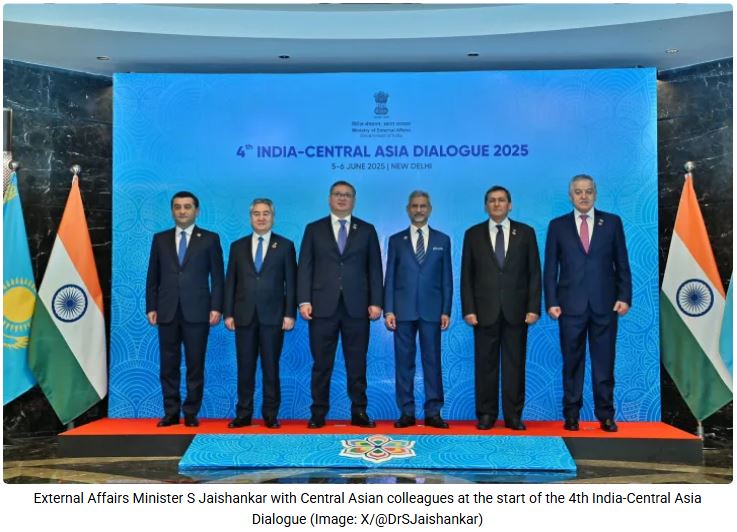
India hosted the 4th edition of the India–Central Asia Dialogue in New Delhi, chaired by External Affairs Minister Dr. S. Jaishankar. The event emphasized regional security, connectivity, critical minerals, counter-terrorism, and economic integration.
What is the India–Central Asia Dialogue?
- Type: Multilateral forum for structured engagement between India and Central Asian republics.
- Initiated in: 2019, Samarkand (Uzbekistan).
- Participants: India, Kazakhstan, Kyrgyz Republic, Tajikistan, Turkmenistan, Uzbekistan.
Key Objectives:
- Strengthen cooperation in trade, connectivity, security, energy, health, and technology.
- Promote regional stability, counter-terrorism collaboration, and sustainable development.
- Enhance people-to-people ties and institutional coordination.
Major Outcomes of the 4th Dialogue:
- Security Cooperation:
- Condemned terror attacks (e.g., Pahalgam).
- Called for early adoption of the UN Comprehensive Convention on International Terrorism.
- Critical Minerals & Rare Earths:
- Joint intent for collaboration in exploration and investment.
- Decision to hold the 2nd India–Central Asia Rare Earth Forum soon.
- Connectivity & Trade:
- Focus on using the International North-South Transport Corridor (INSTC) and Chabahar Port.
- Supported Uzbekistan and Turkmenistan's inclusion in INSTC.
- Digital & Financial Integration: Agreement to boost digital payments, interbank ties, and trade in local currencies.
- Health and Traditional Medicine: Shared commitment to Universal Health Coverage, medical tourism, and integration of AYUSH systems.
- Clean Energy & Technology: Cooperation on platforms like India Stack, International Solar Alliance, and biofuels.
- Multilateral Support: Reiterated support for India’s permanent seat in UNSC and active role in SCO and UN.
UNICEF’s State of the World’s Children 2024 (SOWC-2024) Report
- 21 Nov 2024
In News:
The world is facing an unprecedented crisis with nearly half of all children – about 1 billion – living in countries that face a high risk of climate and environmental hazards, the UNICEF’s State of the World’s Children 2024 (SOWC-2024) report, said.
Key Highlights:
Environmental Hazards and Children’s Health:
- Children face an increasingly unpredictable and hazardous environment due to climate change, environmental crises, and frontier technologies.
- Nearly 1 billion children live in countries facing high risks from climate and environmental hazards.
- Children’s developing bodies are especially vulnerable to pollution, extreme weather, and environmental hazards.
- Air pollution, rising temperatures, and extreme weather events harm children's respiratory health, increase the spread of diseases like malaria and dengue, and impact food security and access.
Impact of Climate Change:
- Climate destabilization, biodiversity loss, and pollution are intensifying globally.
- Climate-related disasters (e.g., floods) affect water supplies, causing waterborne diseases, a leading cause of death in children under five.
- Extreme weather events, such as floods, can cause trauma, anxiety, and displacement for children.
- By the 2050s, more children will be exposed to extreme climate hazards compared to the 2000s.
- School closures, affecting 400 million children since 2022 due to extreme weather, disrupt education and hinder economic growth.
Projections for Child Survival and Life Expectancy:
- Newborn survival rates: Projected to rise by nearly 4 percentage points to over 98% globally by the 2050s.
- Probability of surviving to age 5: Expected to increase to 99.5%.
- Life expectancy: Expected to rise to 81 years for girls and 76 years for boys by the 2050s.
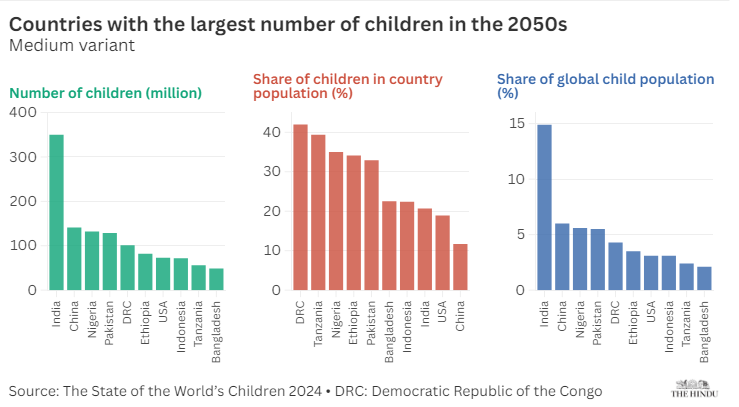
Child Population Trends by 2050:
- Global child population expected to stabilize at 2.3 billion by the 2050s.
- South Asia, Eastern/Southern Africa, and West/Central Africa will have the largest child populations, facing significant challenges in meeting children’s basic needs.
- These regions also face climate risks, inadequate digital infrastructure, and socio-economic challenges.
Technological Advancements:
- Artificial Intelligence (AI), neurotechnology, renewable energy, and vaccine breakthroughs could significantly improve childhood well-being.
- Digitalization: While it can empower children, it also exposes them to online risks, including sexual exploitation and abuse.
Socio-Economic Conditions and Inequality:
- 23% of children projected to live in low-income countries by 2050, a significant increase from 11% in the 2000s.
- GDP per capita in East Asia, Pacific, and South Asia expected to more than double from the 2020s to the 2050s.
- Growing inequalities between high- and low-income countries, particularly in terms of digital access and infrastructure.
Urbanization and Child Welfare:
- By the 2050s, nearly 60% of children globally will live in urban areas, up from 44% in the 2000s.
- Ensuring healthier and more secure urban environments is critical for improving future childhoods.
- Over 95% of people in high-income countries are connected to the internet, compared to just 26% in low-income countries, exacerbating inequalities.
Key Takeaways:
- Children are facing a more hazardous environment than ever before, influenced by climate change, technological developments, and demographic shifts.
- Proactive measures are needed to mitigate environmental risks, promote digital inclusion, and ensure equitable access to resources and opportunities for children globally.
New Disability Certificate Rules (RPwD Rules, 2024)

- 29 Oct 2024
In News:
- The Rights of Persons with Disabilities (RPwD) Rules, 2024, were amended by the Union Government in the wake of the Puja Khedkar controversy, where an IAS probationer was dismissed for alleged forgery in her disability and caste certificates.
- National Platform for the Rights of the Disabled (NPRD) has called for a rollback of the new rules, citing that they make the process of obtaining disability certificates more stringent and cumbersome.
Key Changes Under the New RPwD Rules, 2024
- Authority for Issuing Disability Certificates:
- Only a designated medical authority or a notified competent medical authority at the district level can issue disability certificates.
- NPRD had proposed that experts from non-profits also be authorized to carry out checks, but this suggestion was not accepted.
- Colour-Coded UDID Cards:
- The new rules introduce colour-coded UDID cards to represent levels of disability:
- White (general disability)
- Yellow (moderate disability)
- Blue (severe disability with 80% or higher).
- The new rules introduce colour-coded UDID cards to represent levels of disability:
- Mandatory Online Applications:
- Applicants are now required to apply for disability certificates online, which could be problematic for individuals who lack access to the internet, smartphones, or are digitally illiterate.
- The NPRD has urged the government to retain the option for in-person applications.
- Extended Time for Certificate Issuance:
- The new rules extend the time for issuing disability certificates from one month to three months.
- Reapplication Requirement:
- If there is no action taken on an application for two years, the applicant will have to reapply, which the NPRD considers unacceptable, as it punishes disabled individuals for system failures.
NPRD's Concerns
- Regressive and Burdensome:NPRD believes the amendments are regressive, adding more hurdles for genuine persons with disabilities to access certificates, which are crucial for identification and entitlement to services.
- Lack of Accountability:The NPRD argues that the rules do not address the systemic issues highlighted by the Puja Khedkar case, such as the lack of accountability at various levels in the certification process.
- Online Application Issues:Many people from the disabled community may struggle with technical jargon used in online applications and may not have the resources to complete the process digitally.
- Delay in Issuance:Extending the time for issuing certificates to three months could create delays for those in urgent need of certification for services or entitlements.