
White Phosphorus and International Humanitarian Law
- 11 Mar 2026
In News:
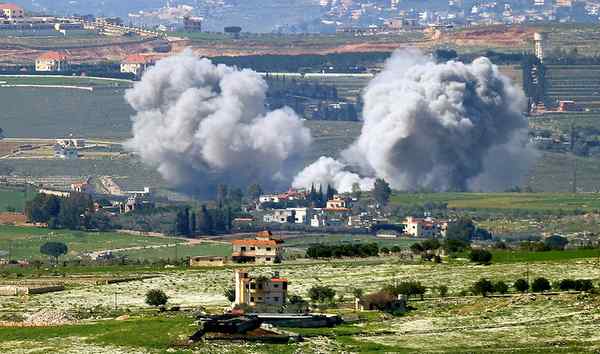
A recent report by Human Rights Watch has accused Israel of using white phosphorus munitions in residential areas of Lebanon, raising concerns about possible violations of international humanitarian law. The allegations come amid escalating hostilities along the Israel–Lebanon border, with Lebanese authorities reporting significant civilian casualties from recent strikes.
What is White Phosphorus?
White phosphorus (WP) is a highly reactive chemical substance commonly used in military operations. It appears as a translucent yellowish-white waxy solid that glows faintly when exposed to oxygen due to slow oxidation.
Key characteristics include:
- Highly flammable: Burns at temperatures exceeding 800°C, hot enough to melt metal.
- Persistent combustion: Continues burning until the chemical is completely consumed or deprived of oxygen.
- Storage conditions: Usually stored under water or inert environments to prevent accidental ignition.
- Odour: Often described as having a garlic-like smell.
Military Uses of White Phosphorus
White phosphorus is mainly used for military tactical purposes, including:
- Smoke Screens: Produces dense smoke that can obscure troop movements or equipment.
- Illumination: Used in flares to light up battlefields at night.
- Incendiary Effects: Can ignite objects and structures due to intense heat.
Because of these functions, it is often categorized as an incendiary munition, which refers to weapons designed to set fire to objects or cause burn injuries through heat, flames, or chemical reactions.
Health and Environmental Hazards
The use of white phosphorus poses severe risks to human health, particularly in populated areas.
Major health impacts include:
- Deep chemical burns that may penetrate to the bone.
- Release of toxic chemicals damaging organs such as the liver, kidneys, and heart.
- Metabolic disorders, including abnormal potassium levels that may lead to cardiac failure.
- Increased risk of building fires and infrastructure destruction when used in civilian areas.
These effects make its deployment in urban environments especially dangerous for civilians.
Legal Status under International Law
White phosphorus is not explicitly banned under the Chemical Weapons Convention when used for non-chemical warfare purposes such as smoke generation. However, its use is regulated by international humanitarian law.
The Convention on Certain Conventional Weapons (CCW) restricts weapons that cause excessive injury or indiscriminate harm.
- Protocol III of the CCW specifically restricts the use of incendiary weapons against civilians or in civilian-populated areas.
- However, white phosphorus is often classified as a multi-purpose munition used for smoke or illumination, enabling some militaries to argue that it does not fall strictly under incendiary weapon restrictions.
- Israel is not a signatory to Protocol III, complicating enforcement and accountability.
Notably, India is a party to all five protocols of the CCW, reflecting its commitment to regulating conventional weapons that cause indiscriminate harm.